

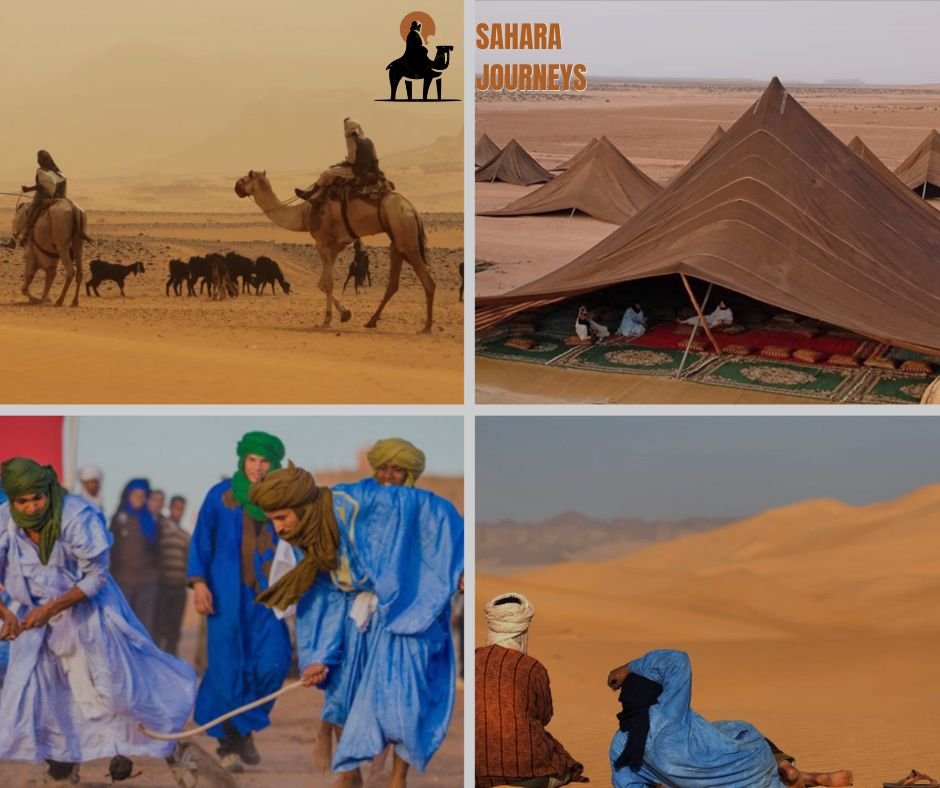

In the vast and silent landscapes of southern Morocco, far from modern cities, a unique way of life continues to endure. The nomads of the Sahara are not just inhabitants of the desert—they are its guardians, living in harmony with nature, guided by traditions passed down through generations.
For travelers seeking authenticity, encountering these communities is one of the most powerful experiences the desert can offer.
Who Are the Nomads of the Moroccan Sahara?
The Moroccan Sahara is home to different nomadic groups, mainly the Amazigh (Berber) populations of the north and the Sahrawi communities of the south. Around regions such as M’Hamid El Ghizlane and deep into the desert, these groups continue to preserve a lifestyle shaped by movement, resilience, and deep cultural identity.
Their languages, traditions, and social structures may differ, but they share a common philosophy: respect for nature, strong family bonds, and a deep sense of hospitality.
A Life Guided by Nature
Nomadic life follows the rhythm of the seasons. Families move throughout the year in search of water and pasture for their animals, adapting constantly to the desert environment.
Their survival depends on a deep understanding of the land—where to find water, how to read the weather, and how to protect their herds. In a place where resources are scarce, nothing is wasted, and balance with nature is essential.
The Khayma: A Home That Travels
The traditional nomadic tent, known as the khayma, is a masterpiece of adaptation. Made from woven animal fibers, it is designed to withstand extreme desert conditions.
Lightweight and practical, it can be assembled or dismantled in a short time, allowing families to move efficiently. Despite its simplicity, the khayma is a warm and organized living space, where family life, hospitality, and daily activities take place.
The Herd: Wealth and Survival
For nomadic families, livestock is more than an economic resource—it is a way of life. Dromedaries, goats, and sheep provide milk, food, materials, and transport for goods.
A well-managed herd represents stability and status. It is also deeply connected to identity, as knowledge of animal care is passed from one generation to the next.
Values at the Heart of Nomadic Culture
What truly defines nomadic life is not only movement, but values:
- Hospitality: Welcoming guests is a sacred duty
- Solidarity: Mutual support ensures survival in harsh conditions
- Honor and respect: Words and commitments carry great importance
- Connection to nature: Taking only what is needed
Visitors are often surprised by the warmth and generosity of nomadic families, even in the most remote areas.
Daily Traditions and Rituals
The Art of Tea
Sharing mint tea is a central ritual in desert life. More than a drink, it is a symbol of friendship and respect. Prepared carefully and served in multiple rounds, it reflects the rhythm of conversation and connection.
Nomadic Cuisine
Food is simple, natural, and adapted to mobility. Meals are prepared over fire using local ingredients such as dates, grains, and milk. Bread baked in sand or under ashes is a traditional highlight of desert cooking.
Clothing and Identity
Nomadic clothing is both practical and cultural. Loose garments protect against heat during the day and cold at night, while also reflecting identity and tradition. Women often wear flowing fabrics, while men favor wide tunics suited to desert conditions.
Celebrations and Social Life
Despite the simplicity of their lifestyle, nomadic communities celebrate life’s important moments with richness and joy. Weddings, births, and religious festivals are marked by music, dance, and gatherings that can last several days.
These events strengthen social bonds and preserve cultural heritage through storytelling, songs, and shared rituals.
Experiencing Nomadic Life Today
Travelers exploring southern Morocco, especially near Erg Chigaga, can still encounter nomadic families and experience a glimpse of this unique way of life.
Spending time with nomads—sharing tea, listening to stories, or observing daily activities—offers a deeper understanding of the desert beyond its landscapes.
Travel Tip: Respecting Nomadic Communities
If you meet nomadic families during your journey:
- Always ask permission before taking photos
- Accept tea as a sign of respect
- Be patient—time flows differently in the desert
- Approach with curiosity and humility
Authentic encounters are based on mutual respect, not observation from a distance.
Challenges Facing Nomadic Life
Today, the nomadic lifestyle is under pressure. Climate change, desertification, and modernization are transforming the Sahara. Many families are gradually settling, and traditional knowledge risks being lost.
Sustainable tourism can play a positive role—when done respectfully—by supporting local communities and preserving cultural heritage.
A Living Heritage of the Sahara
Nomadic culture is not a relic of the past—it is a living, evolving way of life. It reflects resilience, wisdom, and a deep connection to the environment.
To meet the nomads of the Sahara is to discover a different relationship with time, nature, and human connection.
It is, without doubt, one of the most meaningful experiences a journey through the Moroccan desert can offer.
0 Comment