

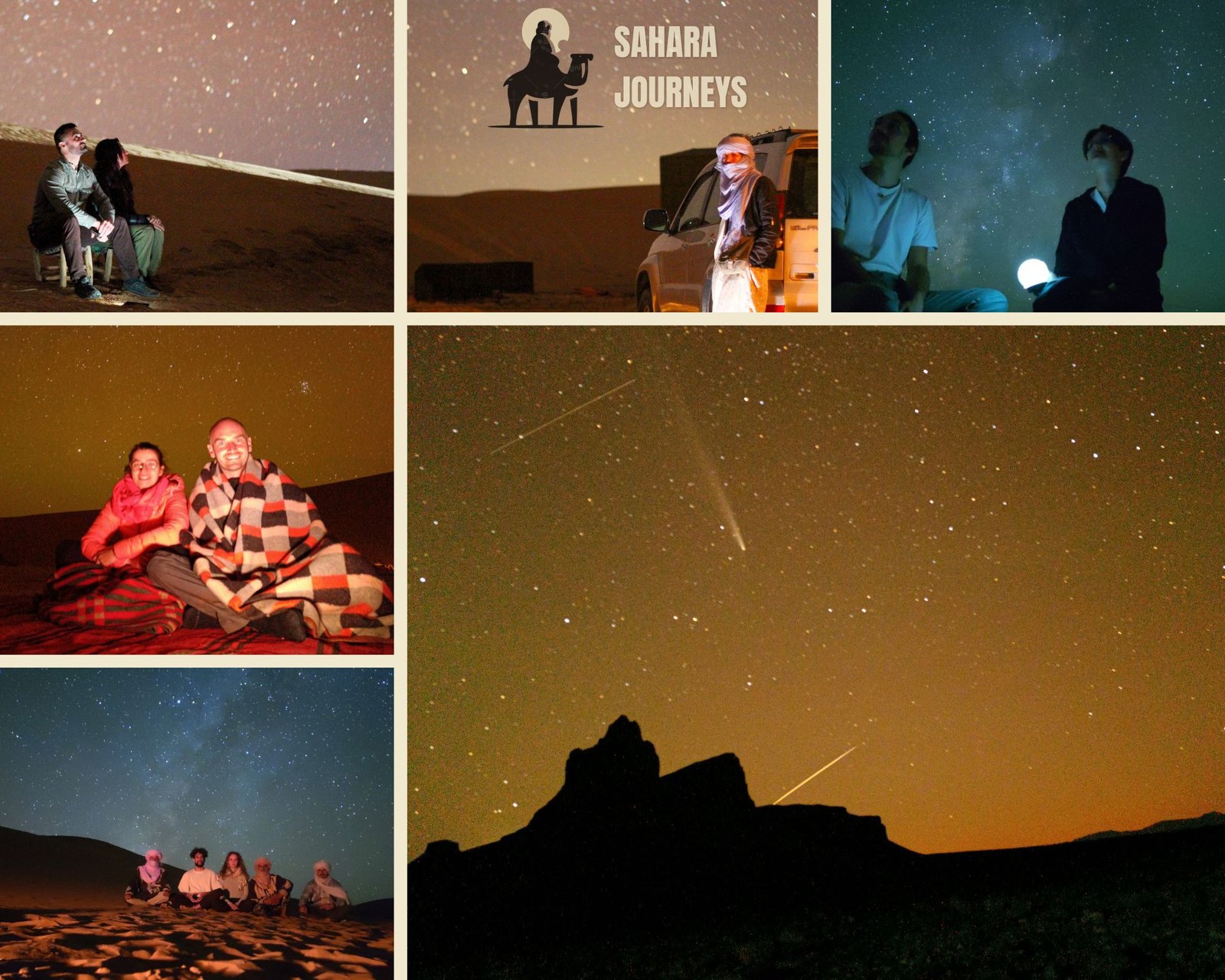

Where the Desert Meets the Universe
Far away from crowded cities and artificial lights, the Moroccan Sahara reveals one of the last truly dark skies on Earth. In the dunes of M’Hamid El Ghizlane and the vast landscapes of Erg Chigaga, the night transforms into a living observatory where thousands of stars illuminate the silence of the desert.
For centuries, nomadic tribes crossing the Sahara relied on the stars to navigate through endless dunes and rocky plateaus. Today, travelers from around the world come for the same reason: to reconnect with the sky, experience the immensity of the universe, and witness the Milky Way in extraordinary clarity.
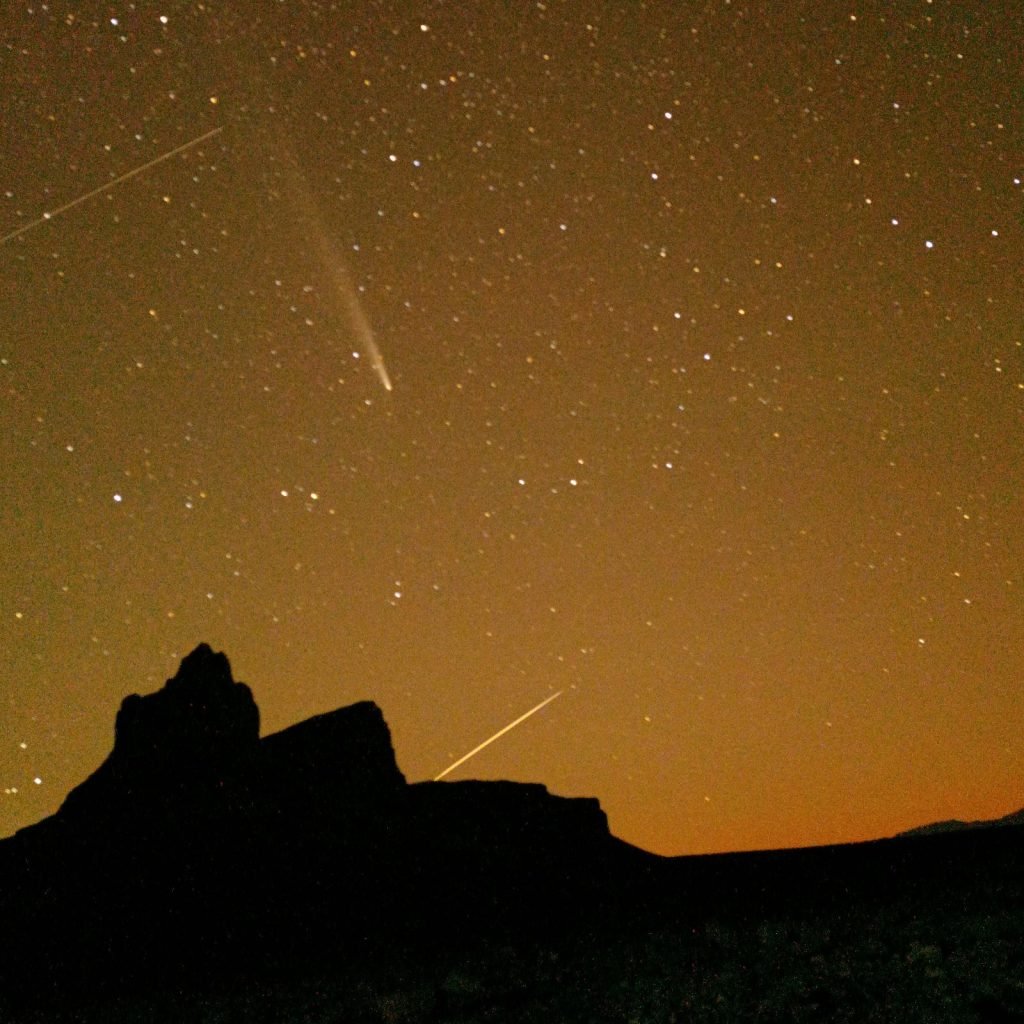
Astrotourism — also known as astronomy tourism or stargazing tourism — is becoming one of the fastest-growing forms of sustainable travel. More travelers are searching for authentic destinations where nature, silence, and darkness still exist. The Moroccan Sahara offers exactly that.
At Sahara Journeys, we organize immersive astrotourism experiences and astrophotography adventures deep in the desert, where guests can spend unforgettable nights beneath some of the clearest skies in North Africa.
What Is Astrotourism?
Astrotourism refers to travel experiences centered around observing the night sky and celestial phenomena in natural environments with minimal light pollution. According to recent research, astrotourism combines nature tourism, cultural tourism, science, photography, and sustainable travel into one unique experience.
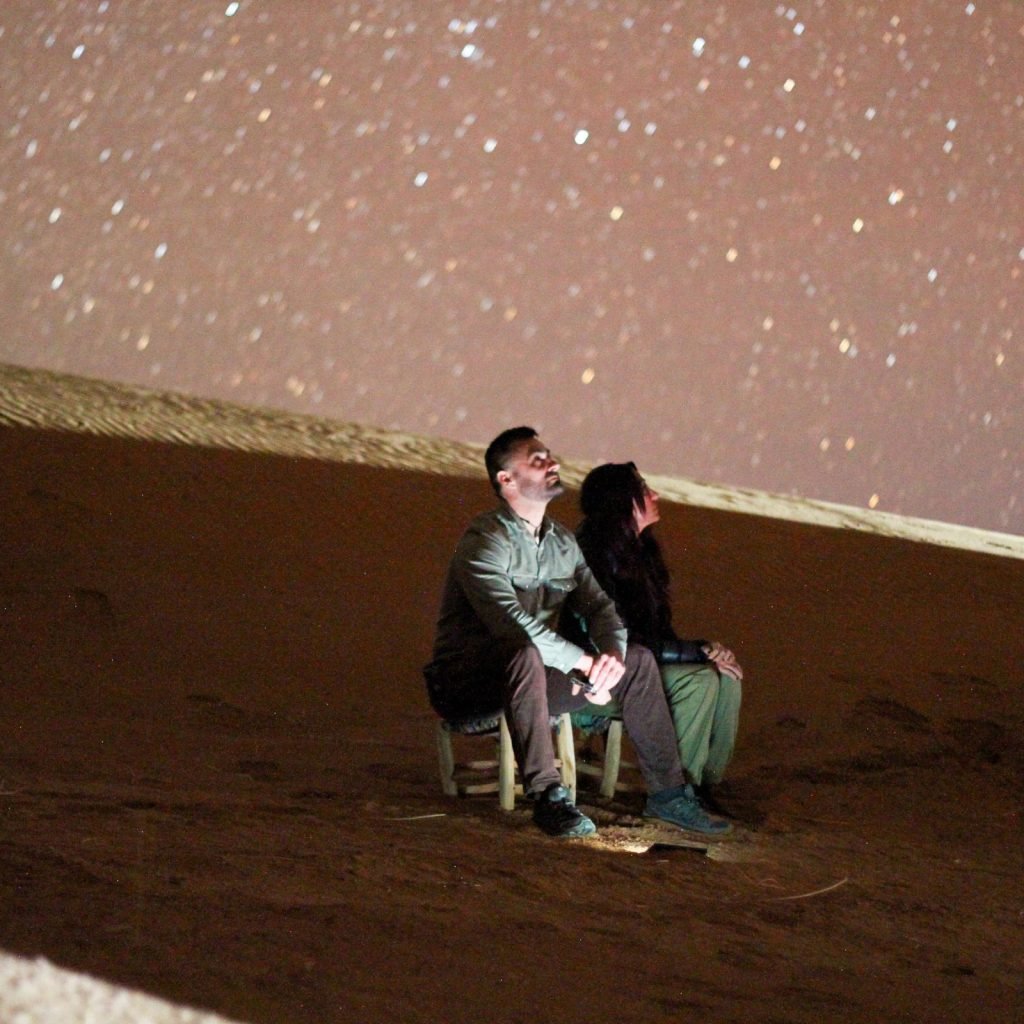
These experiences may include:
Observing lunar cycles and celestial events
Stargazing in dark-sky locations
Astrophotography workshops
Watching meteor showers
Observing the Milky Way
Learning about constellations
Sleeping under the stars
Discovering nomadic astronomical traditions
Unlike traditional tourism focused on busy attractions, astrotourism invites travelers to slow down and reconnect with nature through silence and contemplation.
Why the Moroccan Sahara Is Perfect for Stargazing
1. Exceptional Dark Skies
One of the greatest challenges for astronomers and astrophotographers today is light pollution. In many parts of the world, artificial lighting prevents people from seeing the stars clearly.
The Sahara Desert remains one of the rare places where darkness still dominates the landscape.
In remote areas such as Erg Chigaga, far from urban centers, the sky becomes astonishingly vivid. On moonless nights, the Milky Way stretches from horizon to horizon like a river of light across the desert.
The absence of pollution, dry air, and stable weather conditions create ideal conditions for:
- Deep-sky observation
- Milky Way photography
- Long exposure astrophotography
- Meteor shower observation
- Naked-eye stargazing
2. Silence and Immersion
The desert is not only visually powerful — it is acoustically unique.
Without traffic, cities, or modern distractions, visitors experience an almost total silence rarely found elsewhere in the world. This atmosphere transforms stargazing into something deeply emotional and almost spiritual.
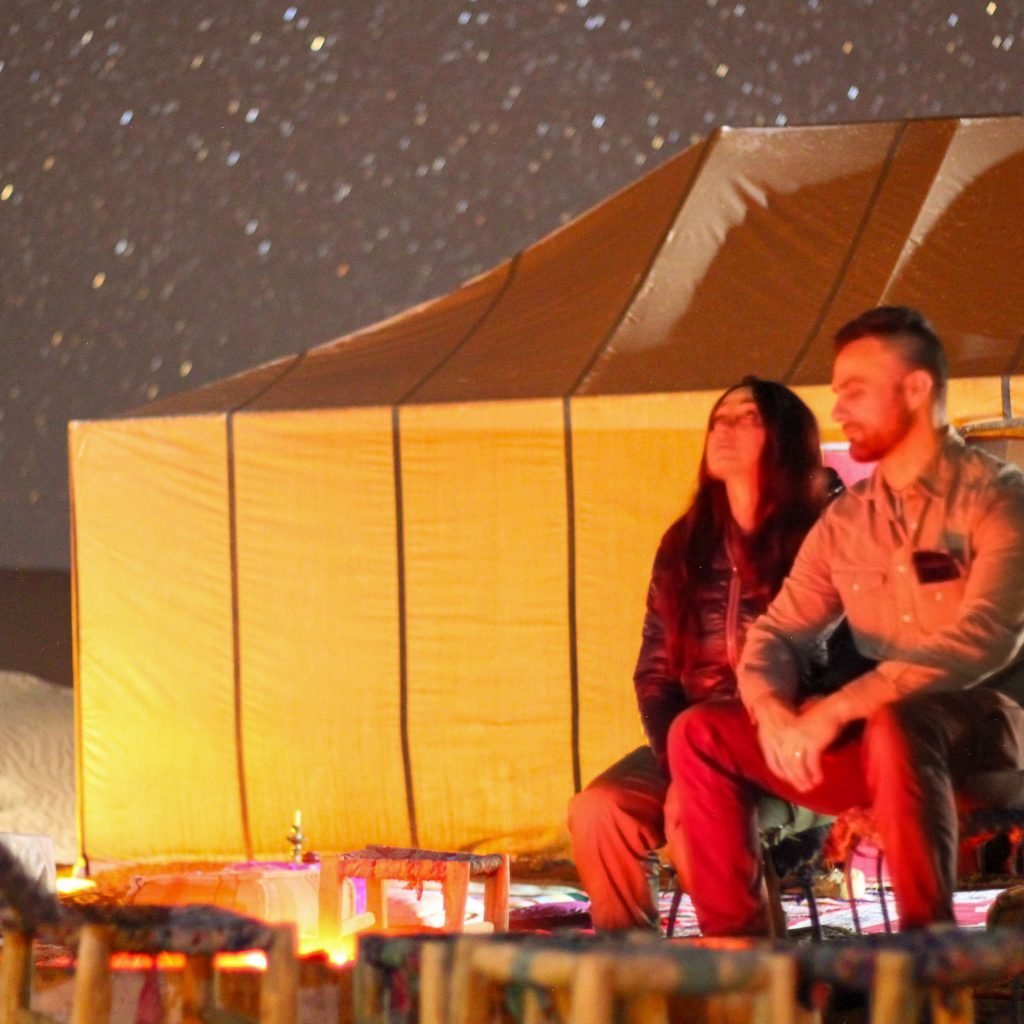
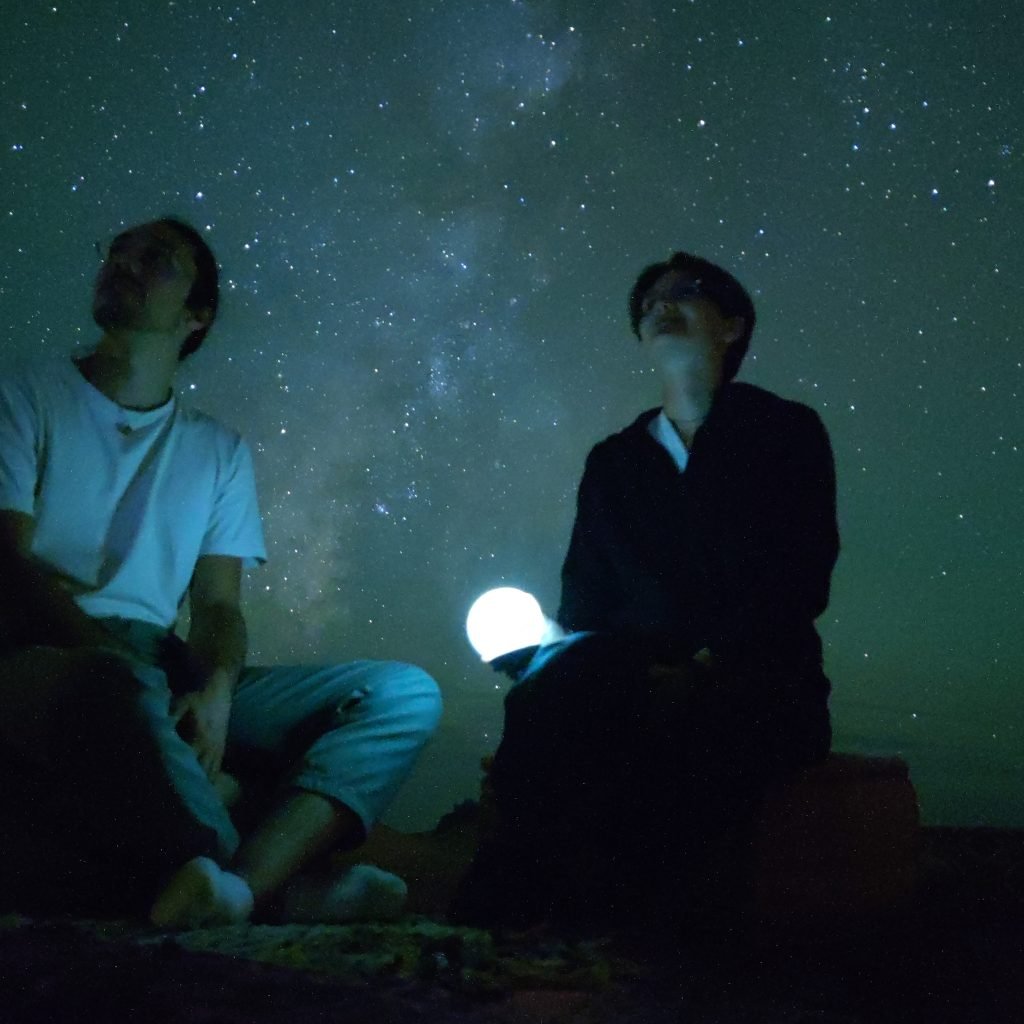
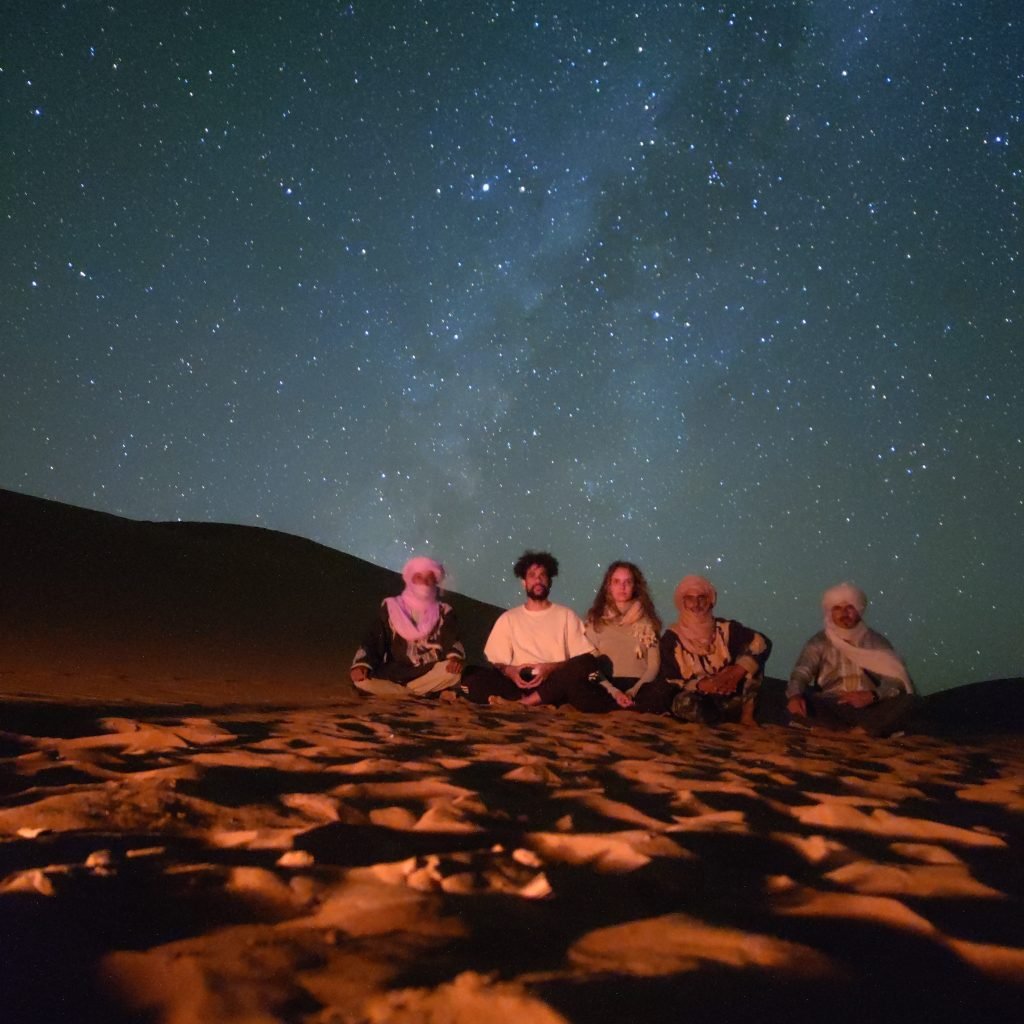
Many travelers describe their first night in the Sahara as transformative:
- watching satellites cross the sky,
- hearing only the wind over the dunes,
- identifying constellations for the first time,
- or simply lying on warm sand beneath thousands of stars.
3. The Nomadic Connection to the Stars
Long before GPS or modern navigation systems, Saharan nomads used celestial bodies to orient themselves across the desert.
The stars were:
- maps,
- calendars,
- weather indicators,
- and spiritual symbols.
Even today, many desert families preserve stories and traditions connected to astronomy and the cycles of the moon.
Traveling through the Sahara with local nomadic guides offers visitors not only beautiful landscapes, but also cultural knowledge passed down through generations.
Astrotourism in Morocco is therefore not only about science — it is also about heritage, storytelling, and ancestral wisdom.
Astrophotography in the Sahara Desert
For photographers, the Moroccan desert is a dream location.
The combination of:
- dramatic dunes,
- ancient kasbahs,
- acacia trees,
- camel caravans,
- and pristine night skies
creates extraordinary opportunities for astrophotography.
Whether you are a professional photographer or a beginner with a tripod and a DSLR, the Sahara offers ideal conditions to capture:
- the Milky Way,
- star trails,
- moonrise over dunes,
- silhouettes under the stars,
- or time-lapse sequences of the night sky.
Best Time for Astrophotography in Morocco
The best seasons for stargazing and astrophotography are generally:
Autumn (September – November)
Pleasant temperatures and clear skies make autumn ideal for night photography.
Winter (December – February)
The air becomes even clearer, creating exceptional visibility for stars and deep-sky observation.
Spring (March – May)
Comfortable weather and stable atmospheric conditions attract many astrophotographers.
Summer can also offer spectacular skies, though daytime temperatures are significantly hotter.
The best periods for Milky Way visibility usually occur between late spring and early autumn.
Essential Tips for Desert Astrophotography
If you are planning a photography adventure in the Sahara, here are a few useful recommendations:
Bring a Stable Tripod
Long exposure photography requires complete stability.
Use a Wide-Angle Lens
Wide lenses allow you to capture both the landscape and the sky.
Avoid Full Moon Nights
Darker nights reveal more stars and better Milky Way detail.
Dress Warmly
Even in the desert, nights can become surprisingly cold.
Protect Your Equipment
Desert sand and wind require proper camera protection.
Learn Basic Star Tracking
Understanding celestial movement can dramatically improve your compositions.
A Sustainable Form of Tourism
Astrotourism is increasingly recognized as a form of sustainable tourism because it encourages:
- environmental awareness,
- preservation of dark skies,
- local community involvement,
- and respect for natural spaces.
Unlike mass tourism, stargazing experiences depend on protecting fragile desert ecosystems and limiting artificial lighting.
The preservation of dark skies is becoming an important global issue. Scientists warn that light pollution continues to increase worldwide, making authentic night skies increasingly rare.
By supporting responsible desert tourism, travelers contribute to preserving these extraordinary natural environments for future generations.
Join an Astrotourism Experience with Sahara Journeys
At Sahara Journeys, we offer tailor-made desert expeditions designed for travelers seeking authentic nights under the stars.
Our astrotourism and astrophotography experiences can include:
- Private desert camps in remote dunes
- Camel trekking under the stars
- 4×4 expeditions to dark-sky locations
- Milky Way photography sessions
- Nomadic storytelling evenings
- Sunrise and sunset photography
- Traditional Saharan music around the fire
- Multi-day desert immersions in Erg Chigaga and M’Hamid
Whether you are:
- a passionate astrophotographer,
- an astronomy enthusiast,
- a nature lover,
- or simply searching for silence and wonder,
the Moroccan Sahara offers an unforgettable journey between Earth and sky.
The Desert Changes at Night
Most travelers discover the Sahara during the day.
But the real magic begins after sunset.
As darkness slowly covers the dunes, the heat fades, the wind softens, and the universe appears above you in breathtaking clarity. In those moments, far from modern noise and artificial lights, the Sahara reminds us of something ancient and essential: humanity has always looked to the stars for inspiration, guidance, and dreams.
And there are few better places to do so than the Moroccan desert.
Frequently Asked Questions About Astrotourism in Morocco
Is the Sahara good for astrophotography?
Yes. The Moroccan Sahara offers excellent dark-sky conditions with very low light pollution, making it ideal for astrophotography and Milky Way photography.
Where is the best place for stargazing in Morocco?
Remote desert regions such as M’Hamid El Ghizlane and Erg Chigaga are among the best locations due to their isolation and natural darkness.
Do I need professional equipment?
No. Even beginners can enjoy incredible stargazing experiences with basic photography equipment or simply with the naked eye.
Can beginners join astrotourism trips?
Absolutely. Our experiences are designed for both beginners and experienced photographers or astronomy enthusiasts.
When is the best season for stargazing in the Sahara?
Autumn, winter, and spring generally offer the best balance between comfortable temperatures and clear skies.
Experience the Stars with Sahara Journeys
The Moroccan Sahara is more than a destination — it is an encounter with silence, nature, and the cosmos.
If you dream of sleeping beneath the Milky Way, photographing the stars above golden dunes, or discovering the timeless relationship between nomads and the night sky, Sahara Journeys invites you to experience the desert differently.
Join us for your own astrotourism adventure in the heart of the Sahara.
0 Comment