


For centuries, long before modern roads crossed the desert, vast caravans of merchants moved slowly across the Sahara, connecting North Africa to the legendary city of Timbuktu. These journeys were not just trade routes—they were lifelines of culture, knowledge, and survival, shaping the history of the desert and the people who called it home.
A Journey Across the Sahara
The great caravans often began in imperial cities such as Marrakech, Fes, or the ancient trading hub of Sijilmassa. From there, merchants crossed the Atlas Mountains and followed the fertile valleys and oases of southern Morocco before entering the vast silence of the Sahara.
Guided by experienced nomads, these caravans traveled from one water source to another, navigating dunes, rocky plateaus, and endless plains. A single journey could cover more than 2,000 kilometers and typically lasted around two months—sometimes longer depending on weather, routes, and conditions.
The Wealth of Trans-Saharan Trade
These expeditions carried valuable goods across continents. From Morocco came textiles, crafted products, and dates, while salt—especially from mines like Taoudeni—was one of the most prized commodities in West Africa. In return, merchants brought back gold, spices, and other rare goods.
Beyond trade, caravans also carried ideas, languages, and traditions, helping to connect distant civilizations. The Sahara, often seen as a barrier, was in fact a bridge between worlds.
Dromedaries and Nomadic Expertise
At the heart of every caravan were dromedaries—remarkable animals perfectly adapted to desert life. They carried heavy loads across extreme distances, making long-distance trade possible in an environment where no other transport could survive.
These caravans were led by nomadic tribes, including Berber and Tuareg guides, whose deep knowledge of the desert was essential. Their mastery of routes, water points, and survival ensured the success of these demanding journeys.
Zagora and the “52 Days to Timbuktu” Legend
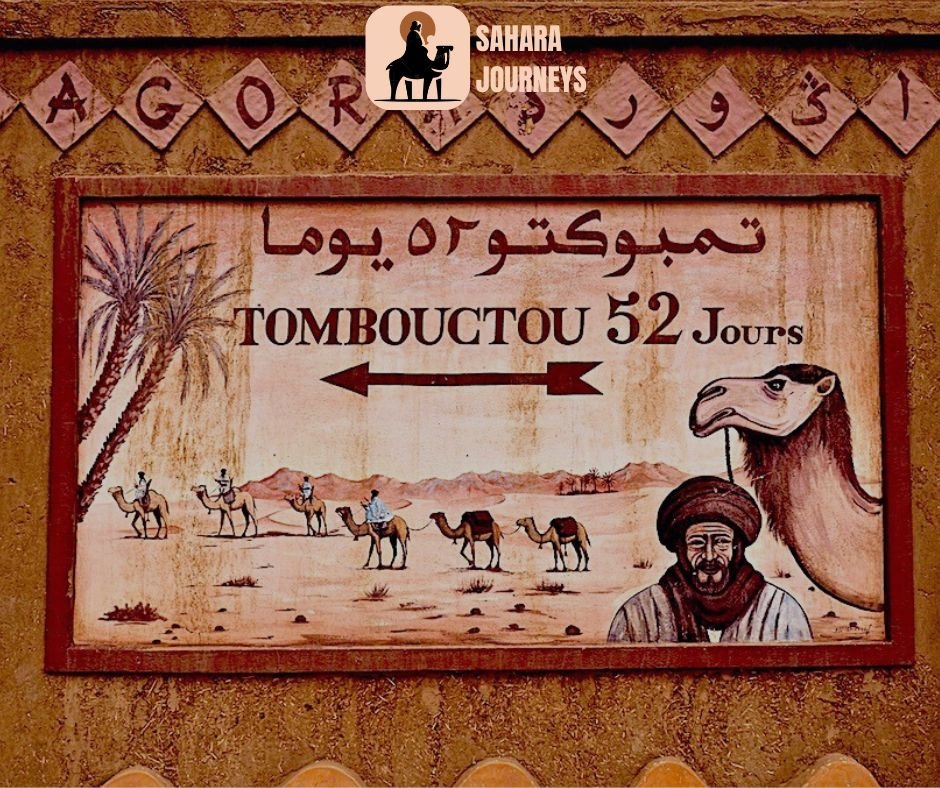
One of the most iconic symbols of this history can still be found in Zagora, where a simple wooden sign reads: “Timbuktu – 52 days.”
This famous inscription reflects the estimated time it once took caravans to reach Timbuktu from southern Morocco. While symbolic, it captures the spirit of these journeys—long, uncertain, and filled with both risk and hope.
Zagora was a key departure point along the historic “Salt Route,” linking Morocco to sub-Saharan Africa. Today, the sign remains a powerful reminder of the endurance and determination of those who crossed the desert.
A Lasting Cultural Legacy
The caravan routes were not only economic networks but also cultural and intellectual corridors. Timbuktu became one of Africa’s greatest centers of learning, attracting scholars, traders, and explorers from across the continent and beyond.
Although caravans no longer operate as they once did, their legacy lives on in the traditions of desert communities and in the stories passed down through generations.
Follow the Caravan Trails Today
Today, travelers can still experience the spirit of these ancient routes in southern Morocco, particularly around M’Hamid El Ghizlane and the vast dunes of Erg Chigaga. Walking along these paths with local nomadic guides offers a rare glimpse into a timeless world where the rhythm of the desert remains unchanged.
It is not just a journey through landscapes—but a journey through history.
0 Comment