

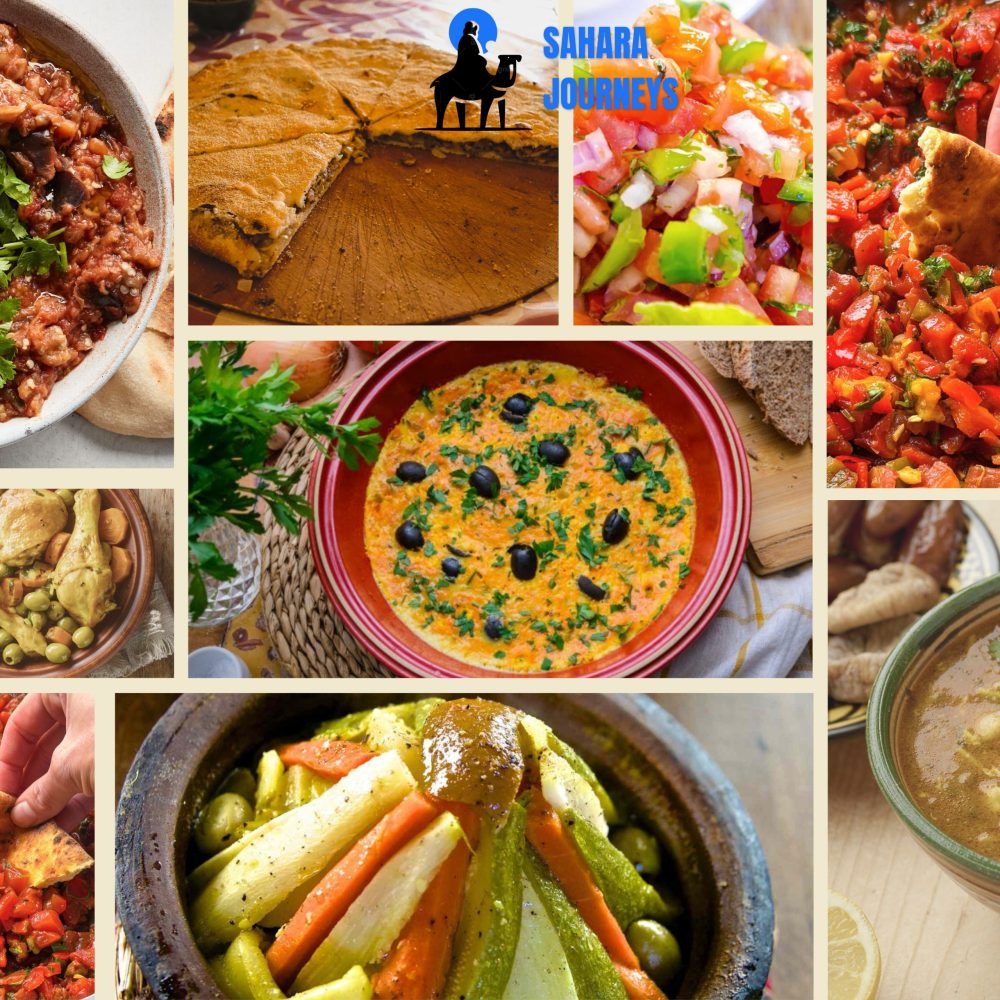

Moroccan cuisine is widely regarded as a pinnacle of Mediterranean and African fusion. It is a sensory map of the country’s history, blending Berber foundations with Arab spices, Andalusian refinement, and nomadic resourcefulness. However, for those embarking on a pedestrian trek into the deep south, the culinary landscape shifts. In the remote reaches of the Draa Valley and the vast hamadas, gastronomy becomes a masterclass in survivalist ingenuity—simple, hearty, and perfectly adapted to the rhythms of the walking caravan.
At SAHARA JOURNEYS, we believe that food is not just fuel for the trek, but a cultural bridge. Understanding the transition from urban Moroccan fare to the traditional “desert kitchen” is essential for every traveler.
1. The Pillars of Moroccan Gastronomy
In the towns and villages acting as gateways to the desert, such as M’hamid El Ghizlane, the cuisine is characterized by the complex layering of spices (Ras el Hanout), the use of local dates, and the balance of sweet and savory.
- The Tagine: More than just a dish, the tagine is the conical clay vessel that slow-cooks ingredients to perfection. Expect tender lamb with prunes, or chicken with preserved lemons and olives, simmered over a low charcoal fire.
- Couscous: Traditionally a Friday staple, this hand-rolled semolina is steamed multiple times until fluffy and topped with seven seasonal vegetables and a rich, aromatic bouillon.
- Harira: A hearty tomato-based soup with lentils and chickpeas. It is the quintessential comfort food of Morocco, often used to break the fast or provide warmth on a cool desert evening.
2. Desert Gastronomy: The Nomadic Kitchen
Once you leave the paved roads and begin your trek with your camel team, the menu changes. Desert gastronomy is defined by portability and the constraints of cooking over an open fire or in a sand-covered “oven.” In this environment, the camels act as the mobile pantry, carrying all necessary supplies for the duration of the journey.
- Madfouna (The Sand Bread): Often called “Berber Pizza,” this is the most iconic desert meal. It is a thick dough stuffed with minced meat, herbs, onions, and spices, traditionally buried and baked in a hole in the sand filled with hot embers.
- Tagine du Nomade: Unlike the elaborate versions found in city riads, these are rustic and robust. They utilize the sturdy vegetables carried by the camels—carrots, potatoes, and onions—slow-cooked over a small wood fire at the bivouac.
- The Power of Dates: High in energy and easy to transport, dates are the primary snack for trekkers. Paired with a handful of almonds, they provide the sustained glucose needed for hours of walking.
3. Essential Gastronomy Guide for Trekkers
Eating in the wilderness requires a different mindset. Water is the most precious commodity, and every ingredient is meticulously managed by the team.
| Meal | Typical Fare | Notes |
| Breakfast | Freshly baked bread, olive oil, honey, and processed cheese. | Served with coffee or milk-tea to prepare for the morning walk. |
| Lunch | Freshly prepared cold salads (lentils, rice, tomatoes) and seasonal fruit. | Always light and refreshing to avoid heaviness during the afternoon stages. |
| Tea Time | Traditional Moroccan mint tea served with nuts or biscuits. | A vital social ritual in the desert known as “Berber Whiskey.” |
| Dinner | Hot Tagine, Couscous, or Pasta Soup followed by tea. | The main meal of the day, shared around the campfire at the mobile camp. |
4. The Ritual of Saharan Tea
In the desert, tea is more than a drink; it is a sign of hospitality and a way of measuring time. The preparation is a slow, meditative process involving the “washing” of the green tea leaves and the pouring of the liquid from a height to create a thick, frothy foam.
- The Three Cups: Tradition dictates that you drink three cups. The first is bitter like life, the second is strong like love, and the third is soft like death.
- Thermoregulation: Despite the external heat, drinking hot tea actually helps the body regulate its temperature more effectively than cold water, making it the perfect beverage for the Saharan climate.
5. Nutrition and Dietary Requirements
Walking through the sands and rocky plateaus is physically demanding. We ensure that our mobile kitchen provides balanced meals rich in the carbohydrates and proteins necessary for daily exertion.
- Vegetarians/Vegans: Moroccan cuisine is naturally friendly to vegetarians due to the abundance of legumes. Please inform the team in advance so the cook can adapt the evening meals accordingly.
- Water Management: As per our environmental protocol, we provide mineral water in large containers to refill your reusable bottles. We strongly recommend using filtering bottles (like Lifestraw) to minimize plastic waste in these pristine landscapes.
- Digestive Health: We suggest including the “Natural Kit” (Peppermint or Ginger essential oils) in your personal luggage to help your system adjust to the change in diet and the desert environment.
[Check some of Our treks in the desert]
6. Environmental Ethics in the Desert Kitchen
Operating a kitchen in the middle of a trek requires strict environmental discipline to ensure no trace is left behind.
- Zero Waste: Every scrap of organic waste is either shared with the camels or buried deep to decompose naturally. All inorganic waste (tins, plastic) is packed back out to the nearest village.
- Firewood Conservation: Our team uses deadwood collected sparingly or brings charcoal to avoid damaging the rare desert scrub and acacia trees.
- Water Conservation: Cleaning and cooking are done with minimal water. This is why we ask travelers to use “dry hygiene” methods (wipes and no-rinse lotions) rather than expecting running water at the mobile bivouac.
Experience the flavors of the South as they have been for centuries—simple, honest, and shared around a communal fire under a canopy of stars.
[Check some of Our treks in the desert]
0 Comment